
Install the app
How to install the app on iOS
Follow along with the video below to see how to install our site as a web app on your home screen.
Note: This feature may not be available in some browsers.
You are using an out of date browser. It may not display this or other websites correctly.
You should upgrade or use an alternative browser.
You should upgrade or use an alternative browser.
Israel Declares War After Hamas Attacks. UPDATE: Israel Ends Ceasefire, Begins Bombing Gaza
- Thread starter Knuckles666
- Start date



Where there’s smoke there’s fire and it’s always something with this cat. It’s cool yaw click. He just move a little funny for my taste.I fucks with Shawn King. Y'all can hate though but I chopped it up with homie. You can think he's a grifter or con but calling him a cracka is the height of ignorance and a vestige of white supremacy. You can't choose your parents, g. Nigga is a mulatto. I can show you 3 of my wife's relatives that look just like this high yellow nicca and they all got two "Black" parents.
To each their own.
Who didn't see that outcome ?
Those who carefully read those comments and watched those videos on this 143-pages-thread, they're also able to come to the same conclusion.
BGOL can educate you on serious topics, and that's a good thing about this board besides fine hoes !
At the end of the day, they (Palestinians) are the ones who'll decide the Hamas' fate.
Last edited:

AbsolutelyAt the end of the day, they (Palestinians) are the one who'll decide the Hamas' fate.
The interesting thing is, seem like there’s little resistance from other groups tho
Which is why, Israeli and Americans speak so loudly about non Hamas influence in leadership

They arrested the CAC.
Stuart Seldowitz, who was acting director for the National Security Council South Asia Directorate from 2009 to 2011, was seen on a video posted to X on Tuesday mocking a halal vendor's citizenship status, English-speaking skills and Islamic religion.

 www.foxnews.com
Former Obama administration official charged with hate crime after confrontation with NYC food cart vendor
A former Obama administration official has been arrested after he was seen in now-viral videos spewing racist remarks at a food cart vendor.Stuart Seldowitz, who was acting director for the National Security Council South Asia Directorate from 2009 to 2011, was seen on a video posted to X on Tuesday mocking a halal vendor's citizenship status, English-speaking skills and Islamic religion.
Former Obama administration official charged with hate crime after confrontation with NYC food cart vendor
A former administration official under Obama was arrested after being caught on video spewing racist remarks to a food cart vendor, according to New York City police.
This is worldwide. Not just the US and the Netherlands. You will find this in Latin America too.

This has to be the dumbest shit I heard all day. Nobody in the Middle East recognizes Thanksgiving. This chick is crazy.
YupAt the end of the day, they (Palestinians) are the one who'll decide the Hamas' fate.
This is worldwide. Not just the US and the Netherlands. You will find this in Latin America too.
Not a corner of the globe these fascists aren’t taking over. Not a coincidence either.
Boycott campaigns over Gaza war hit Western brands in some Arab countries
Farah SaafanNovember 23, 20231:46 AM CSTUpdated 7 hours ago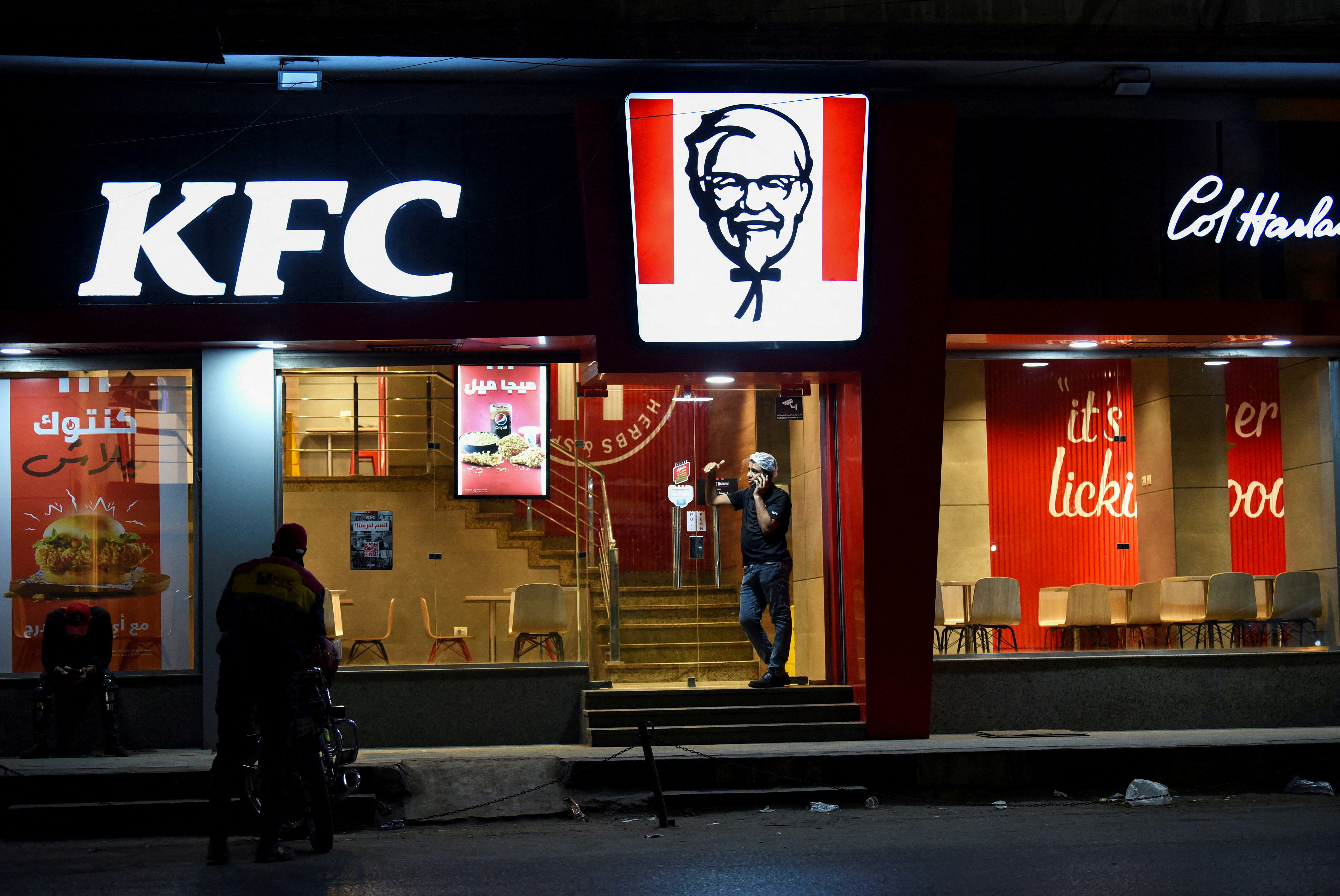
CAIRO, Nov 22 (Reuters) - On a recent evening in Cairo, a worker cleaned tables in an empty McDonald's restaurant. Branches of other Western fast-food chains in the Egyptian capital also appeared deserted.
All have been hit by a largely spontaneous, grassroots boycott campaign over Israel's military offensive in the Gaza Strip since the deadly Hamas attack in southern Israel on Oct. 7.
Western brands are feeling the impact in Egypt and Jordan, and there are signs the campaign is spreading in some other Arab countries including Kuwait and Morocco. Participation has been uneven with only minor effects seen in Saudi Arabia and the United Arab Emirates.
Some of companies the campaign is directed at are perceived to have taken pro-Israeli stances, and some are alleged to have financial ties to Israel or investments there.
As the campaign has started to spread, boycott calls circulated on social media have expanded to list dozens of companies and products, prompting shoppers to shift to local alternatives.
In Egypt, where there is little chance of people taking to the streets because of security restrictions, some see the boycott as the best or only way to make their voices heard.
Advertisement · Scroll to continue
"I feel that even if I know this will not have a massive impact on the war, then this is the least we can do as citizens of different nations so we don't feel like our hands are covered in blood," said 31-year-old Cairo resident Reham Hamed, who is boycotting U.S. fast food chains and some cleaning products.
In Jordan, pro-boycott residents sometimes enter McDonald's and Starbucks branches to encourage scarce customers to take their business elsewhere. Videos have circulated of what appear to be Israeli troops washing clothes with well-known detergent brands which viewers are urged to boycott.
Advertisement · Scroll to continue
"No one is buying these products," said Ahmad al-Zaro, a cashier at a large supermarket in the capital Amman where customers were choosing local brands instead.
In Kuwait City on Tuesday evening, a tour of seven branches of Starbucks, McDonald's and KFC found them nearly empty.
In Rabat, the capital of Morocco, a worker at a Starbucks branch said the number of customers had dropped off significantly this week. The worker and the company gave no figures.
Advertisement · Scroll to continue
McDonald's Corp said in a statement last month that it was "dismayed" by disinformation regarding its position on the conflict and that its doors were open to all. Its Egyptian franchise has underlined its Egyptian ownership and pledged 20 million Egyptian pounds ($650,000) in aid to Gaza.
Asked for comment, Starbucks referred to a statement on its website about its operations in the Middle East that was updated in October. The statement said the company was a non-political organisation and dismissed rumours that it had provided support to the Israeli government or army. Starbucks, which earlier this month reported record revenues for the fourth quarter, said it had nothing further to share on its business.
Advertisement · Scroll to continue
Other Western companies did not immediately respond to requests by Reuters for comment.
'UNPRECEDENTED REACTION'
The boycott campaigns have spread in countries where pro-Palestinian sentiment has traditionally been strong. Egypt and Jordan made peace with Israel decades ago, but those deals did not lead to a popular rapprochement.The protests also reflect a groundswell of anger over an Israeli military operation that is more destructive than previous offensives, causing a humanitarian crisis and killing 13,300 civilians, according to authorities in Hamas-run Gaza.
Israel said about 1,200 people were killed in the Hamas attack on Oct. 7, and that about 240 were taken hostage.
Previous boycott campaigns in Egypt, the Arab world's most populous nation, had less impact, including those advocated by the Palestinian-led Boycott, Divestment, Sanctions (BDS) movement.
"The scale of the aggression against the Gaza strip is unprecedented. Therefore, the reaction, whether on the Arab street or even internationally, is unprecedented," said Hossam Mahmoud, a member of BDS Egypt.
Some campaigners have singled out Starbucks for suing its workers' union over a post on the Israel-Hamas conflict, and McDonald's after its Israeli franchise said it gave free meals to Israeli military personnel.
An employee at McDonald's corporate offices in Egypt who asked not to be named said the Egyptian franchise's October and November sales fell by at least 70% compared to the same months last year.
"We are struggling to cover our own expenses during this time," the employee said. Reuters was not immediately able to verify the figures the employee provided.
Sameh El Sadat, an Egyptian politician and co-founder of TBS Holding, a supplier to Starbucks and McDonald's, said he had noticed a drop or slowdown of about 50% in demand from his clients.
UNEVEN TAKE-UP
Despite efforts by targeted brands to defend themselves and retain business with special offers, boycott campaigns have continued catching on, in some cases outside the Arab world.In Muslim-majority Malaysia, a worker at a McDonald's in Putrajaya, Malaysia's administrative capital, said the branch was seeing about 20% fewer customers, a figure that Reuters was not immediately able to verify.
Ride-hailing app Grab also faced calls for a boycott in Malaysia after the chief executive's wife said she had fallen "completely in love" with Israel during visits there.
She later said the posts were taken out of context. The Malaysian arms of Grab and McDonald's said following the boycott calls that they would donate aid for Palestinians.
Earlier this month, Turkey's parliamentremoved Coca-Cola and Nestle products from its restaurants, with a parliamentary source citing a "public outcry" against the brands although no big Turkish company or state agency has cut ties with Israel.
Take-up of boycotts has been uneven, with no major impact seen in some countries including Saudi Arabia, the United Arab Emirates and Tunisia. Even where boycotts have a wider following, some people are sceptical they can have much effect.
"If we really want to boycott and support these people (Palestinians), we take arms and fight with them...Otherwise, no," said Cairo kiosk owner Issam Abu Shalaby.
($1 = 30.9000 Egyptian pounds)

Shame cause KFC in Cairo is actually pretty damn good. I don’t eat that mutant food in the States but in Egypt it’s top notch.Boycott campaigns over Gaza war hit Western brands in some Arab countries
Farah SaafanNovember 23, 20231:46 AM CSTUpdated 7 hours ago
CAIRO, Nov 22 (Reuters) - On a recent evening in Cairo, a worker cleaned tables in an empty McDonald's restaurant. Branches of other Western fast-food chains in the Egyptian capital also appeared deserted.
All have been hit by a largely spontaneous, grassroots boycott campaign over Israel's military offensive in the Gaza Strip since the deadly Hamas attack in southern Israel on Oct. 7.
Western brands are feeling the impact in Egypt and Jordan, and there are signs the campaign is spreading in some other Arab countries including Kuwait and Morocco. Participation has been uneven with only minor effects seen in Saudi Arabia and the United Arab Emirates.
Some of companies the campaign is directed at are perceived to have taken pro-Israeli stances, and some are alleged to have financial ties to Israel or investments there.
As the campaign has started to spread, boycott calls circulated on social media have expanded to list dozens of companies and products, prompting shoppers to shift to local alternatives.
In Egypt, where there is little chance of people taking to the streets because of security restrictions, some see the boycott as the best or only way to make their voices heard.
Advertisement · Scroll to continue
"I feel that even if I know this will not have a massive impact on the war, then this is the least we can do as citizens of different nations so we don't feel like our hands are covered in blood," said 31-year-old Cairo resident Reham Hamed, who is boycotting U.S. fast food chains and some cleaning products.
In Jordan, pro-boycott residents sometimes enter McDonald's and Starbucks branches to encourage scarce customers to take their business elsewhere. Videos have circulated of what appear to be Israeli troops washing clothes with well-known detergent brands which viewers are urged to boycott.
Advertisement · Scroll to continue
"No one is buying these products," said Ahmad al-Zaro, a cashier at a large supermarket in the capital Amman where customers were choosing local brands instead.
In Kuwait City on Tuesday evening, a tour of seven branches of Starbucks, McDonald's and KFC found them nearly empty.
In Rabat, the capital of Morocco, a worker at a Starbucks branch said the number of customers had dropped off significantly this week. The worker and the company gave no figures.
Advertisement · Scroll to continue
McDonald's Corp said in a statement last month that it was "dismayed" by disinformation regarding its position on the conflict and that its doors were open to all. Its Egyptian franchise has underlined its Egyptian ownership and pledged 20 million Egyptian pounds ($650,000) in aid to Gaza.
Asked for comment, Starbucks referred to a statement on its website about its operations in the Middle East that was updated in October. The statement said the company was a non-political organisation and dismissed rumours that it had provided support to the Israeli government or army. Starbucks, which earlier this month reported record revenues for the fourth quarter, said it had nothing further to share on its business.
Advertisement · Scroll to continue
Other Western companies did not immediately respond to requests by Reuters for comment.
'UNPRECEDENTED REACTION'
The boycott campaigns have spread in countries where pro-Palestinian sentiment has traditionally been strong. Egypt and Jordan made peace with Israel decades ago, but those deals did not lead to a popular rapprochement.
The protests also reflect a groundswell of anger over an Israeli military operation that is more destructive than previous offensives, causing a humanitarian crisis and killing 13,300 civilians, according to authorities in Hamas-run Gaza.
Israel said about 1,200 people were killed in the Hamas attack on Oct. 7, and that about 240 were taken hostage.
Previous boycott campaigns in Egypt, the Arab world's most populous nation, had less impact, including those advocated by the Palestinian-led Boycott, Divestment, Sanctions (BDS) movement.
"The scale of the aggression against the Gaza strip is unprecedented. Therefore, the reaction, whether on the Arab street or even internationally, is unprecedented," said Hossam Mahmoud, a member of BDS Egypt.
Some campaigners have singled out Starbucks for suing its workers' union over a post on the Israel-Hamas conflict, and McDonald's after its Israeli franchise said it gave free meals to Israeli military personnel.
An employee at McDonald's corporate offices in Egypt who asked not to be named said the Egyptian franchise's October and November sales fell by at least 70% compared to the same months last year.
"We are struggling to cover our own expenses during this time," the employee said. Reuters was not immediately able to verify the figures the employee provided.
Sameh El Sadat, an Egyptian politician and co-founder of TBS Holding, a supplier to Starbucks and McDonald's, said he had noticed a drop or slowdown of about 50% in demand from his clients.
UNEVEN TAKE-UP
Despite efforts by targeted brands to defend themselves and retain business with special offers, boycott campaigns have continued catching on, in some cases outside the Arab world.
In Muslim-majority Malaysia, a worker at a McDonald's in Putrajaya, Malaysia's administrative capital, said the branch was seeing about 20% fewer customers, a figure that Reuters was not immediately able to verify.
Ride-hailing app Grab also faced calls for a boycott in Malaysia after the chief executive's wife said she had fallen "completely in love" with Israel during visits there.
She later said the posts were taken out of context. The Malaysian arms of Grab and McDonald's said following the boycott calls that they would donate aid for Palestinians.
Earlier this month, Turkey's parliamentremoved Coca-Cola and Nestle products from its restaurants, with a parliamentary source citing a "public outcry" against the brands although no big Turkish company or state agency has cut ties with Israel.
Take-up of boycotts has been uneven, with no major impact seen in some countries including Saudi Arabia, the United Arab Emirates and Tunisia. Even where boycotts have a wider following, some people are sceptical they can have much effect.
"If we really want to boycott and support these people (Palestinians), we take arms and fight with them...Otherwise, no," said Cairo kiosk owner Issam Abu Shalaby.
($1 = 30.9000 Egyptian pounds)
Good on them for standing up however they can.

For the record, the parentheses translate to “the land of Israel.”
That’s a massive Zionist trigger point when this coin comes up.
them sand ninajs didn’t like thatFor the record, the parentheses translate to “the land of Israel.”
That’s a massive Zionist trigger point when this coin comes up.
Nobody would. Zionists have been playing chess since 1927.them sand ninajs didn’t like that

Jenna has integrity.....

We really need to stop explaining ourselves to honkies
Jenna has integrity.....
She’s fine too, she said it had nothing to do with her Co worker though
Similar threads


- Replies
- 2
- Views
- 98

- Replies
- 11
- Views
- 476
